
Oral health plays a vital role in overall well-being. One problem many people may face is impacted teeth. In this article, we'll explore what impacted teeth are, the problems they can cause, treatment options, and why it's worth seeking treatment. Veda Stom for safe and comfortable removal of impacted teeth.
What is an impacted tooth?
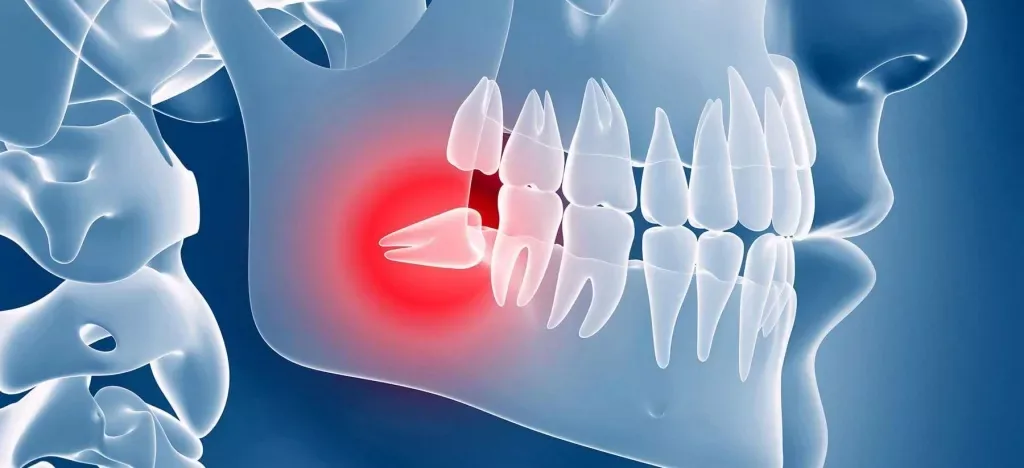
Impacted tooth An impacted tooth is a tooth that has not fully erupted through the gum and remains partially or completely hidden beneath the gum tissue or bone. Most often, wisdom teeth (third molars) become impacted, but this problem can also occur with other teeth. Impacted teeth can be unilateral or multiple, requiring special attention from a dentist.
Causes and symptoms of retention
The causes of tooth retention can be varied:
- Lack of space in the jaw: Limited space may prevent the tooth from erupting normally.
- Anatomical features: Incorrect tooth angle or abnormal root shape.
- Chewing or injury: Damage to the gums or jaw can affect tooth movement.
- Genetic factors: Hereditary predisposition to tooth retention.
Symptoms of impacted teeth may include:
- Pain and discomfort: In the gum area where the tooth is trying to erupt.
- Swelling and inflammation: Around an impacted tooth.
- Malocclusion: Displacement of adjacent teeth.
- Periodontitis: Inflammation of the tissues around the impacted tooth, which can lead to more serious problems.
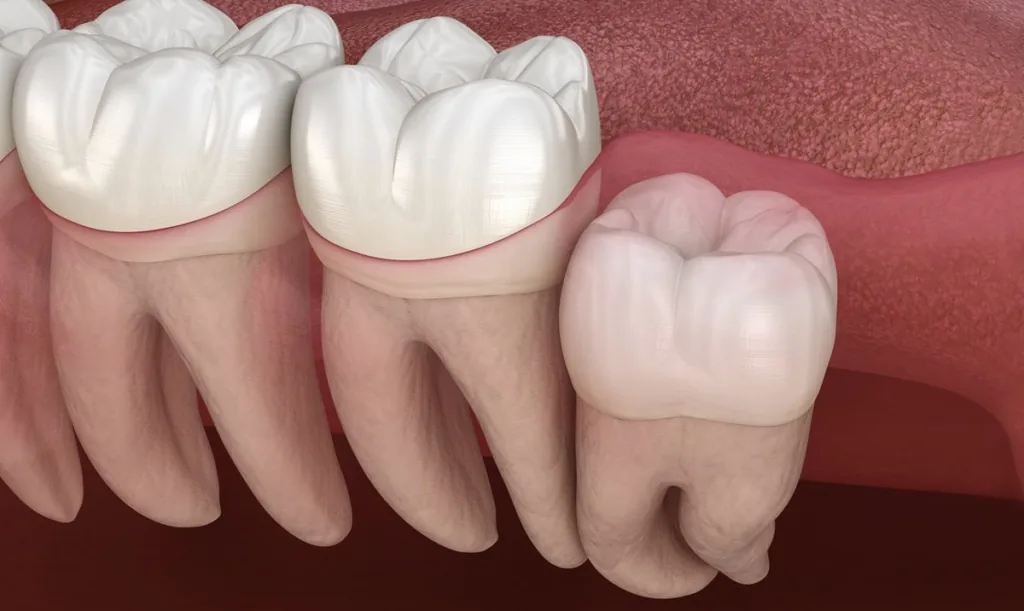
Methods of treatment and removal of impacted teeth
Treatment for impacted teeth depends on their position and degree of retention. Common methods include:
- Observation and regular check-upsIn some cases, impacted teeth do not cause serious problems and can be left under the supervision of a dentist.
- Conservative treatment: Using medications to reduce inflammation and relieve symptoms.
- Surgical removal: The most common method for removing impacted teeth. The procedure involves:
- Anesthesia: Local or general, depending on the complexity of removal.
- Gum incision: To access the tooth.
- Tooth extraction: Careful extraction of the tooth with minimal damage to surrounding tissues.
- Suturing the wound: To speed up healing and prevent infection.
Removing an impacted tooth is a procedure that requires a highly qualified dentist and the use of modern equipment to minimize discomfort and speed up recovery.
Why you should contact Veda Stom
Clinic Veda Stom In Tashkent, we offer professional removal of impacted teeth using cutting-edge technology and an experienced team of specialists. Here's why you should choose us:
- Experienced specialistsOur dentists have many years of experience in removing impacted teeth and undergo regular training to improve their skills.
- Modern equipmentWe use the latest technology and tools to ensure the accuracy and safety of our procedures.
- Minimal discomfort: Thanks to the use of modern anesthesia methods and surgical techniques, the procedure for removing an impacted tooth is as comfortable as possible for the patient.
- Individual approachEach case is considered individually, which allows us to select the optimal treatment plan for each patient.
- Postoperative supportWe provide a full range of post-operative services, including aftercare recommendations and monitoring of the healing process.
Impacted teeth can cause various oral and general health problems. It's important to seek prompt medical attention for diagnosis and treatment to avoid complications. Veda Stom In Tashkent, we offer safe and comfortable removal of impacted teeth, providing high-quality services and care for every patient. Don't put off taking care of your health! Schedule an appointment at the clinic. Veda Stom and get professional help from experienced specialists. Your health and beautiful smile are our top priority!