
When a person loses a single tooth, it seems like a simple, manageable defect. When several teeth are missing, eating becomes difficult, the bite changes, and smiling becomes a source of embarrassment. But what's not always immediately obvious is the hidden impact tooth loss has on the health of the entire jaw system. Bone begins to shrink, the load is redistributed, adjacent teeth shift, and conventional dentures no longer provide the stability needed to alleviate the problem.
Implant-supported prosthetics have become the perfect solution that restores not only the appearance but also the full feeling of one's own teeth. At VEDA STOM, this method has long been the standard because it combines reliability, functionality, and highly predictable results, allowing patients to lead their normal lives without restrictions.
What is implant-supported dentures and why is it considered the "gold standard"?
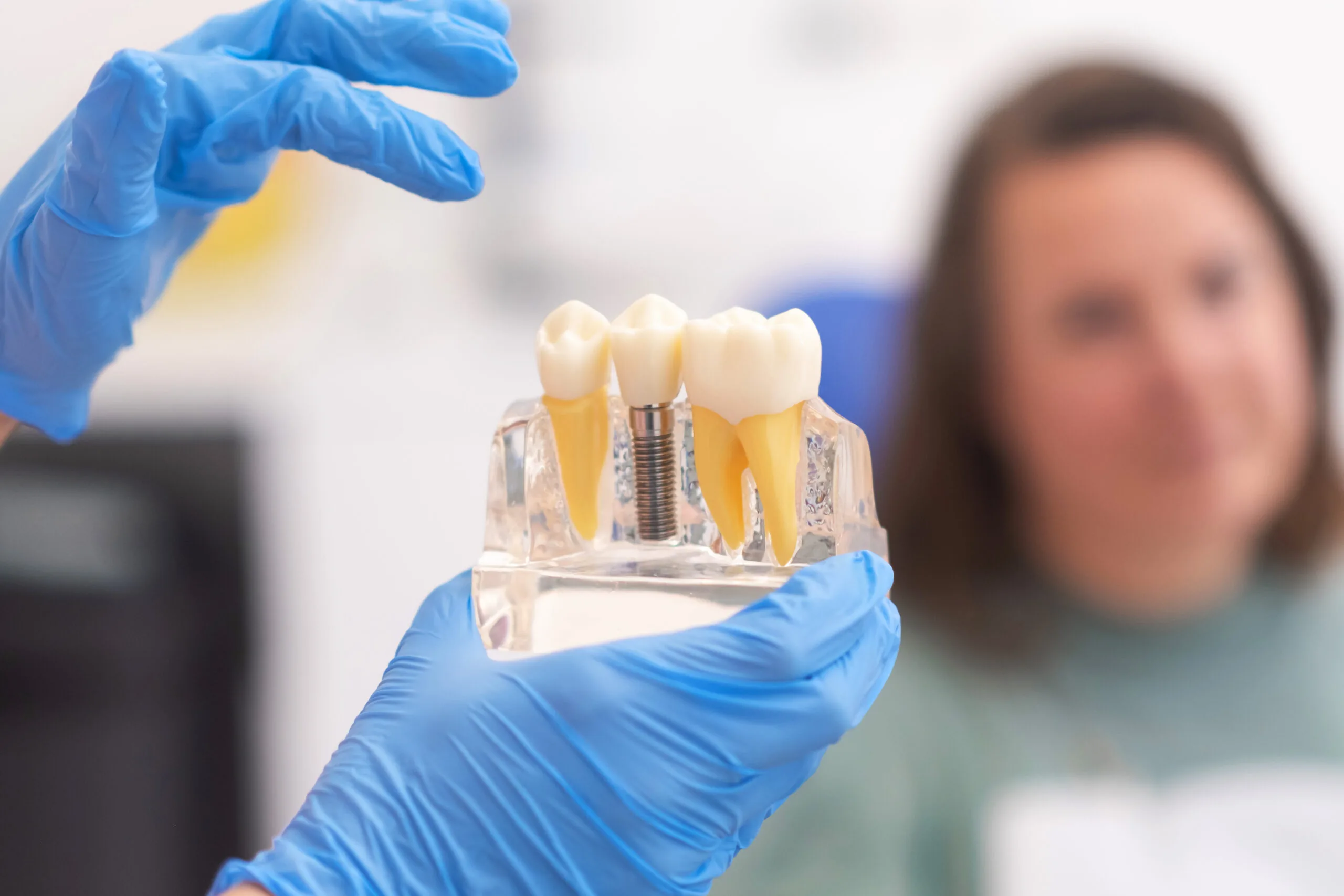
Unlike traditional bridges and removable dentures, implants create a foundation that completely replaces the tooth root. Essentially, they act as an artificial support onto which a crown, bridge, or more complex orthopedic structure is secured.
This approach allows for the most natural restoration possible: the implant integrates into the bone, absorbing chewing forces and stimulating the tissue, preventing tissue loss. This means the face retains its natural contours, while the adjacent teeth remain stable.
This is why implant-supported prosthetics are not considered a temporary measure—it is a comprehensive solution designed for the long term and for a person's comfort in everyday life.
The benefits of implant-based prosthetics: why patients choose this method
1. No mobility - teeth feel like real teeth
The implant is so stable that the patient no longer notices the difference between the artificial tooth and the natural one. They can safely chew meat, nuts, and crunchy vegetables—things they had to give up with conventional dentures.
2. Neighboring teeth remain intact
Traditional bridges require grinding down adjacent teeth. This isn't necessary with implants—the structure is self-supporting, without affecting healthy tissue.
3. Preventing bone loss
The bone stops bearing weight after tooth extraction and gradually shrinks. The implant fully compensates for this load, maintaining jaw health.
4. Aesthetics on par with natural teeth
Implant-supported dentures look natural, replicate the shape and color of teeth, and do not have the problems associated with removable dentures, such as mobility or speech impairment.
5. Convenience in everyday life
There is no need to remove dentures, use additional fixing devices, or worry about the structure shifting while talking or eating.
What structures can be installed on implants?
Implant-supported prosthetics are flexible and suitable for both individual restorations and complete restoration of a dental arch.
Single crown
The most natural way to replace a single missing tooth. Adjacent teeth remain intact.
Bridge on implants
Used when several teeth are missing in a row, the bridge distributes the load evenly and provides high stability.
Complete orthopedic structures
If all teeth are missing from a jaw, partially removable or fully fixed dentures are secured to implants. This eliminates the need for traditional full dentures, which often cause discomfort.
How is implant prosthetics performed at VEDA STOM?
Implant-supported prosthetics is more than just the insertion of a metal screw; it's a comprehensive treatment that requires precise diagnostics and an understanding of the patient's anatomy. The outcome directly depends on this.
1. Consultation and diagnostics
The first step is a thorough assessment of the tissue, bite, and jaw. 3D diagnostics are used, allowing the doctor to visualize the bone structure and the location of anatomically important areas.
2. Treatment planning
A personalized plan is drawn up that takes into account not only medical indications, but also the patient’s wishes regarding aesthetics and functionality.
3. Implant installation
The procedure is performed in accordance with minimally invasive surgical protocols. Precision is essential to ensure correct load distribution and a comfortable healing process.
4. Osseointegration stage
The implant gradually fuses with the bone, becoming part of it. This period varies from person to person, but it ultimately ensures stability for many years.
5. Fixation of the crown or orthopedic structure
After the implant has taken root, a crown is installed that replicates the shape and color of natural teeth.
Why is it better to have dental implants installed at VEDA STOM?
Implantation requires not only technical experience, but also in-depth diagnostics, attentiveness, and the ability to work with the anatomical features of each patient.
VEDA STOM provides:
- full cycle of treatment, from diagnostics to final design;
- experience of specialists, working for several decades with various clinical cases;
- modern equipment, including 3D tomographs and digital planning systems;
- premium materials, ensuring precision and aesthetics;
- individual approach, without template schemes;
- comfort and control at every stage, which makes the process as predictable as possible.
The clinic's philosophy is based on the idea that prosthetics is not something that "fills a void," but a solution that should restore comfort, confidence, and a full quality of life to a person.
Implant-supported prosthetics isn't just about restoring missing teeth; it's about returning to your daily life without limitations. This method combines stability, naturalness, and durability, making it the best choice for patients who expect a high level of aesthetics and functionality.
At the VEDA STOM clinic, implantation and prosthetics are combined into a single, carefully designed process that allows for results as close as possible to natural teeth – both in appearance and feel.