
When a person experiences tooth loss—whether single or multiple—it impacts not only their appearance but also their daily life, from eating habits to their confidence in social interactions. Modern dentistry offers solutions that help restore lost function and natural aesthetics, and choosing a prosthesis is no longer simply a matter of "removable or fixed"—it offers a much wider range of options.
At the VEDA STOM clinic, we help patients choose the perfect option that best suits their anatomical needs, lifestyle, and future treatment expectations. Prosthetics is a long-term solution that requires a competent approach from the very beginning.
What types of dentures are available today: the wide possibilities of modern dentistry
Modern dentures differ not only in appearance but also in design, materials, ease of use, and patient adaptation. Understanding these fundamental differences helps you choose a design that not only addresses the missing tooth but also ensures full restoration of chewing function and long-term comfort.
Dentures are generally divided into two broad categories: fixed dentures, which are fixed in the mouth and function like natural teeth, and removable dentures, which can be removed and replaced independently. Each option has its own area of application, strengths, and limitations.
Fixed dentures: maximum stability and the feeling of natural teeth
Fixed structures are most often chosen by patients who want a long-lasting, durable, and as natural-looking solution as possible.
Crowns and bridges
Crowns allow you to restore a severely damaged tooth while preserving its root, while bridges are used when one or more consecutive teeth are missing. They look like full-fledged teeth, accurately reproduce the anatomy, and provide comfort during chewing and speaking.
These designs are well suited for patients who want to completely recreate the aesthetics of their smile and at the same time do not want to depend on removable dentures.
Implant-supported prosthetics as part of fixed solutions
Implantation has expanded the possibilities of fixed prosthetics, allowing teeth to be restored without placing stress on adjacent teeth. The implant serves as an artificial root, and the crown or bridge on it provides strength and stability that is as close to natural as possible.
Fixed structures on implants are especially recommended in cases of significant tooth loss, when it is necessary to restore the functionality of the entire jaw.
Removable dentures: modern designs designed for convenience and adaptation
Removable dentures should not be considered an outdated option—technology and materials have changed significantly in recent years, making these solutions more comfortable, anatomically accurate, and aesthetically pleasing.
Partial removable dentures
They are used in cases of partial tooth loss, are fixed with support on the remaining teeth and gums, have a lightweight design and allow for the restoration of chewing function without complex interventions.
Complete removable dentures
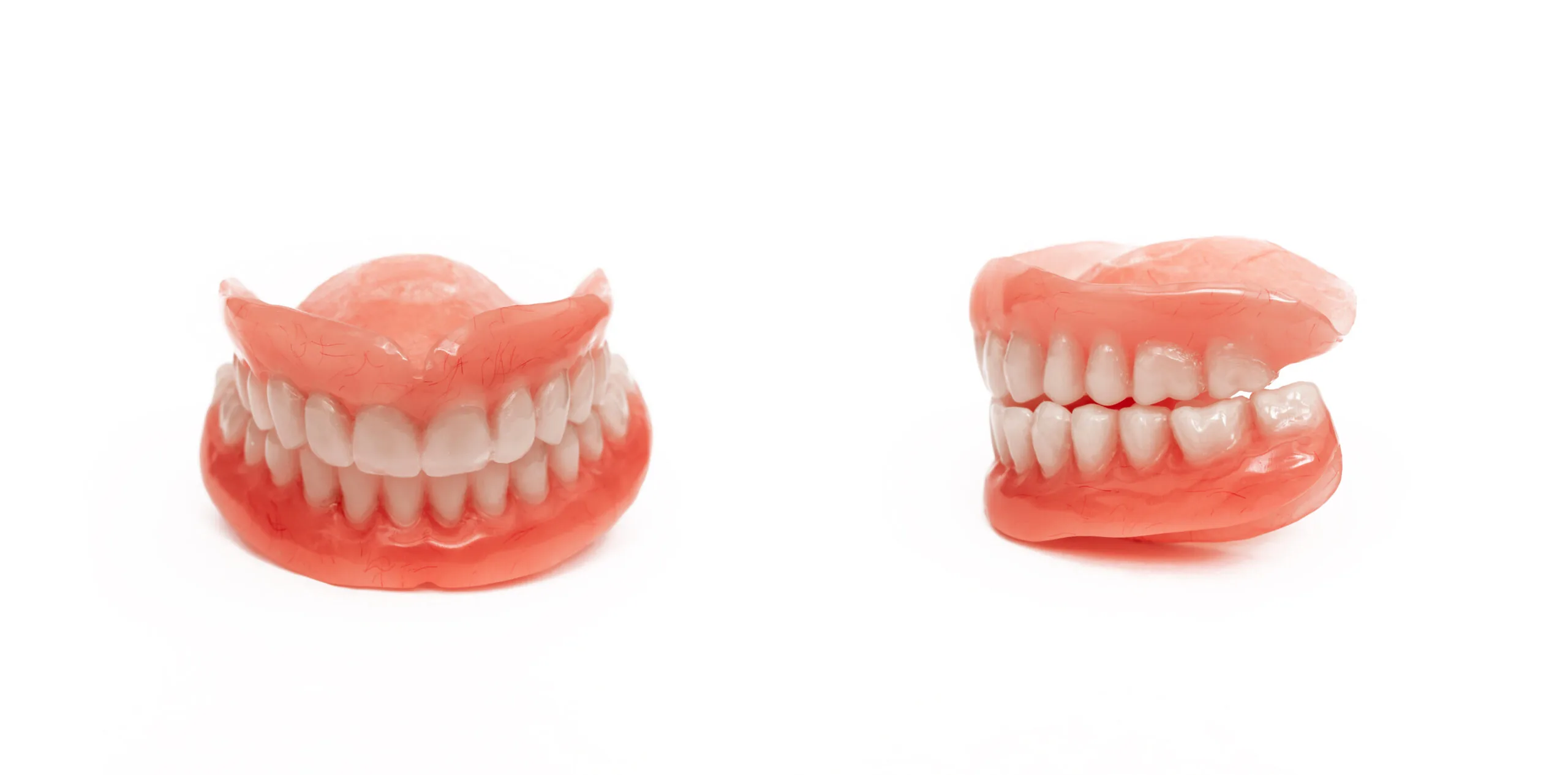
They are used when all teeth are missing from the jaw. Modern dentures conform to the contours of the mucous membrane, provide secure support, and allow the patient to feel confident in everyday life.
The use of removable structures is justified in situations where either it is impossible to install implants, or the patient prefers gentle methods of dental restoration. However, it should be kept in mind that both complete removable and partial removable dentures contribute to accelerated bone loss due to the transfer of chewing pressure to the mucous membrane.
How to Know Which Type of Dentures is Right for You
The correct choice of prosthesis depends on a whole range of factors, and each of them is important:
- condition of the remaining teeth and tissues;
- volume and location of missing teeth;
- the level of load that the prosthesis must withstand;
- patient's wishes regarding aesthetics and comfort;
- the presence of contraindications to surgical procedures;
- the need for a long-term or temporary solution;
- Features of the bite and jaw anatomy.
Only after a full diagnosis—including 3D imaging, mucosal assessment, and bite analysis—can a dentist recommend a design that will truly work, rather than simply fill an empty space.
Why it's important to trust VEDA STOM specialists when choosing a prosthesis
Dental restoration is a process that requires precision and a deep understanding of anatomy. At VEDA STOM, every stage of dental restoration is supervised by specialists using modern equipment and individualized planning methods.
The clinic's advantages include:
- comprehensive diagnostics before choosing the type of prosthesis;
- use of precise digital modeling techniques;
- modern materials providing maximum comfort;
- attention to aesthetics and naturalness of the result;
- accompanying the patient until full adaptation to the prosthesis;
- many years of experience of doctors who are able to work with clinical cases of varying levels of complexity.
VEDA STOM's approach is based on the idea that prosthetics should be more than just a technical process, but a means of restoring the patient's quality of life. Therefore, solutions are always chosen not according to a "one-size-fits-all" approach, but rather taking into account all individual characteristics.
The choice between removable and fixed dentures is never entirely straightforward. It's not a matter of fashion or dentist preference—it's a decision that depends on the health of the teeth, the condition of the tissues, the patient's lifestyle, and their expectations.
Modern dentistry offers a variety of options, each with its own advantages, and the specialists at VEDA STOM help you make an informed and confident choice. Thanks to precise diagnostics, a personalized approach, and attentive support, patients receive a prosthesis that looks natural, functions reliably, and provides daily comfort.